
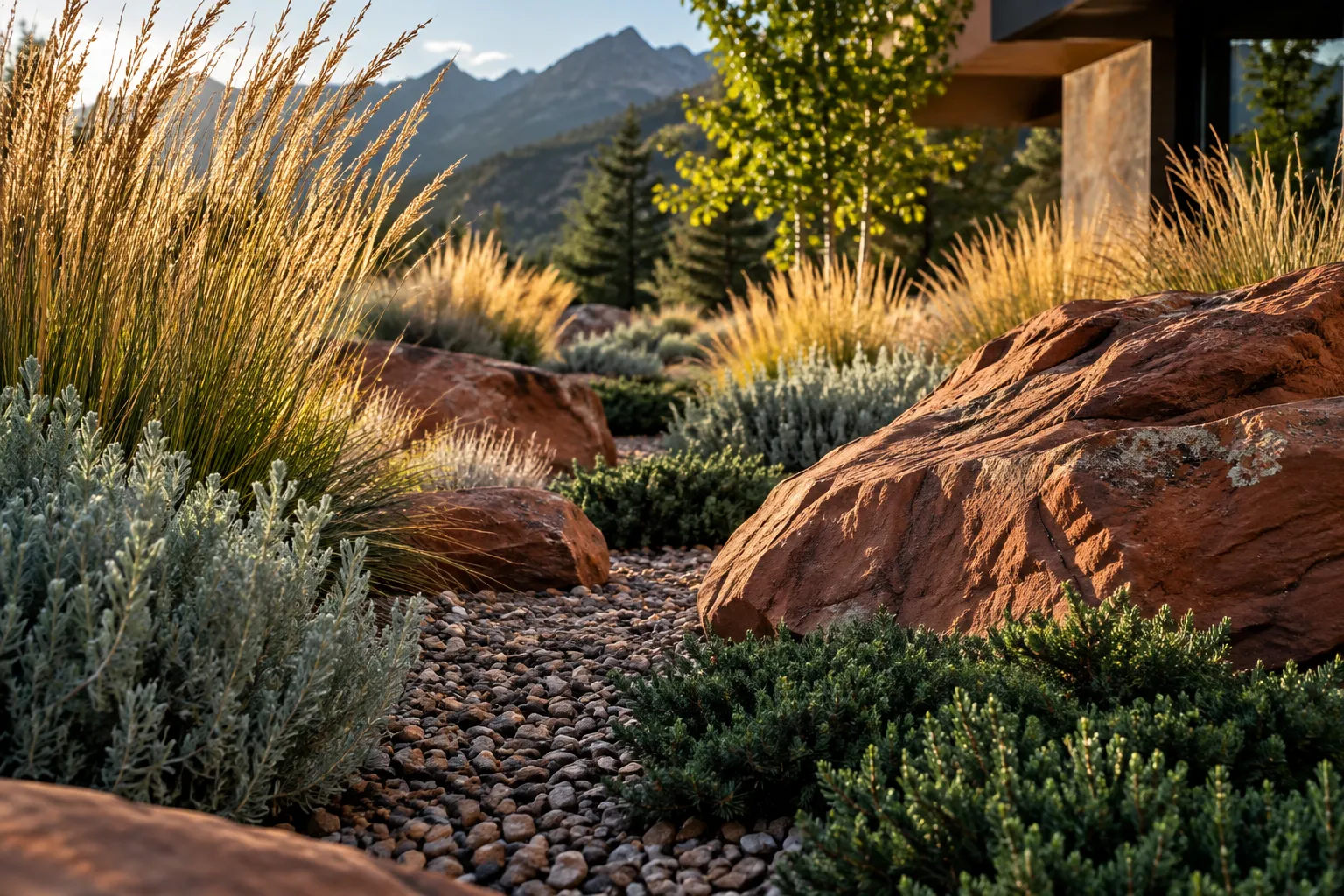
Picture your yard with flowers beside the front walk, a comfortable place to sit and enough lawn for the things you actually do on grass. That is a useful starting point for xeriscaping. The goal is a landscape that makes thoughtful use of water and gives you more reasons to spend time outside.
For Erie, Boulder and Lafayette homeowners, water-wise design can start with one underused area or a bigger rethink of the property. You can shape the look around your home, whether you prefer a tidy planted border or a softer, more natural garden.
Start with what you want the yard to do
Before choosing plants or rock, identify the spaces you use. Keep a practical lawn area where it serves a purpose. Look more closely at grass you mainly water and mow without spending time on it, such as a narrow strip beside a driveway or an awkward front corner.
CSU’s water-wise design guidance connects those decisions with plant placement, soil, irrigation, mulch and ongoing care. Reducing lawn is one possible part of the project; the plan should also make the remaining landscape work well.
Colorado guidance: CSU Extension: Water-wise landscape design
Give living plants a leading role
A water-wise yard can have a generous amount of greenery, flowers and changing texture. Choose plants for the growing conditions in each bed, then consider how their shapes and colors will look together.
For ideas, the Colorado Native Plant Society’s Front Range guide includes low-water options such as Rocky Mountain penstemon, blue flax and prairie coneflower. Treat those as a starting list, not a planting prescription. Match the species to the site’s sun, drainage and available space before deciding what to install.
Imagine a few repeated groups along the front walk rather than a different plant every foot. Give the entrance a clear outline, keep the views you enjoy and leave space for the planting to mature. A restrained palette can still be full of life.
Colorado guidance: Colorado Native Plant Society: Front Range and foothills planting guide (PDF)
Group plants that need similar care
Plants that share a bed should be able to share a sensible watering plan. Grouping by water needs, often called hydrozoning, helps avoid watering an entire area for its thirstiest plant. Pay attention to sun and shade within those groups, too.
Plan irrigation at the same time as the landscape. Denver Water recommends separating turf irrigation from other planting. Drip irrigation can suit planting beds, but the layout and watering schedule still need to match the plants. Simply adding drip tubing does not make a landscape water-wise.
Colorado guidance: CSU Extension: Water-wise landscape design · Denver Water: Xeriscape principles
Choose mulch and hardscape for the setting
Mulch helps limit evaporation and weeds, while patios and paths create places to sit and move through the yard. The right combination depends on how the area will be used and what is growing beside it.
Wood mulch and gravel behave differently. Rock can hold and radiate heat, especially in sunny locations, so consider its effect around the home and planting. Soil amendments also need a reason: some native plants are suited to existing soil and do not benefit from automatically adding compost.
Colorado guidance: Denver Water: Xeriscape principles · CSU Extension: Sustainable landscaping
Plan for establishment, then adjust
New low-water plants still need establishment watering. Their mature drought tolerance is not a reason to leave a newly planted bed dry. Check the plants and soil, and adjust watering as roots develop and the weather changes.
Include the first season in your project conversation. Ask who will handle watering, how to check that emitters are working and what signs should prompt a closer look. If you travel often, have that discussion before installation rather than after the first hot week.
The garden will still need attention over time: weeding, appropriate pruning, irrigation checks and occasional mulch care. Choose a landscape you want to maintain, with a level of work that feels realistic for your household.
Colorado guidance: CSU Extension: Watering a home landscape during drought · Denver Water: Xeriscape principles
Choose a first project you will enjoy every day
A good starting area is one that solves an annoyance and improves a view. Perhaps it is the lawn strip that is hard to irrigate, the empty bed you see from the living room or a front entrance that needs more color. Decide what you want that space to become before selecting materials.
If the whole yard is the eventual goal, sketch that larger direction before doing the first phase. It helps keep paths, irrigation and planting connected as the work grows. Your finished landscape should feel like one place, even if it takes more than one project to get there.
Make more of your yard with water-wise design
Erie Lawn Boys brings planting, mulch, stone, paths and irrigation together through xeriscape design and installation in Erie, Boulder and Lafayette. Share the spaces you want to improve, the features you want to keep and the way you would like to use your yard.
Start a xeriscape project